

How Often Should You Service Your HVAC System? A Texas Homeowner’s Guide
When the Texas heat hits triple digits, the last thing any homeowner wants is an air conditioner that quits in the middle of July. Yet every summer, families across Dallas, Houston, and Austin face the same problem: their AC not cooling, warm air blowing through the vents, and a repair bill that routine maintenance could have prevented. Most emergency AC repair calls happen because a system was never serviced on schedule. So how often should you service your HVAC system? For most Texas homes, the answer is at least twice a year, and understanding why can save you thousands in central air repair costs. If your system is already struggling, schedule your AC repair at hvacservicetexas.com or call +1 866-502-1393.
Understanding the AC Problem: Why Service Frequency Matters
Your HVAC system works harder in Texas than in almost any other state. Long cooling seasons, high humidity, and dust put constant strain on compressors, capacitors, and coils. Industry studies consistently show that air conditioners receiving regular service last 30 to 40 percent longer than neglected units and use up to 15 percent less energy.
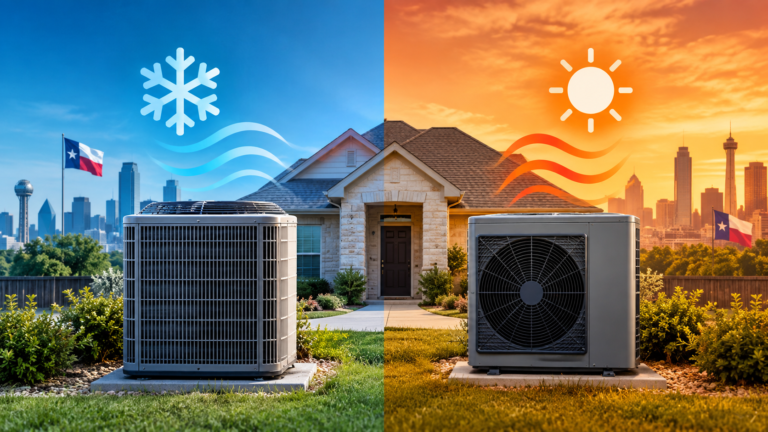
Most HVAC technician recommendations follow the same rule: schedule an AC tune-up twice per year, once in spring before cooling season and once in fall before heating season. In milder climates, one annual visit may be enough, but Texas systems often run from March through October without a break, and that workload turns small issues into major failures fast.
Common AC Problems Homeowners Face in Texas
Because Texas summers are so demanding, certain problems show up again and again. If you notice any of the warning signs below, it may be time for air conditioner repair.
- Weak or warm airflow from vents, often caused by a failing blower motor or a clogged filter
- AC not cooling to the thermostat setting, usually tied to low refrigerant or a dirty condenser coil
- Short cycling, where the unit turns on and off rapidly, stressing the compressor
- Frozen evaporator coils, a frequent issue in humid Gulf Coast cities like Houston and Corpus Christi
- Unusual noises such as grinding, rattling, or screeching from the outdoor unit
- High humidity indoors, meaning the system is no longer removing moisture properly
Any one of these symptoms signals a system that needs attention before it fails completely. A local HVAC professional can diagnose the issue the same day, and urgent situations should always be treated as an emergency AC repair call.
What Causes These AC Issues?
Understanding the root causes helps you prevent them. The most common culprits behind central air repair calls include:
- Clogged air filters. Texas dust and pollen clog filters quickly. A blocked filter restricts airflow, freezes coils, and forces the system to overwork.
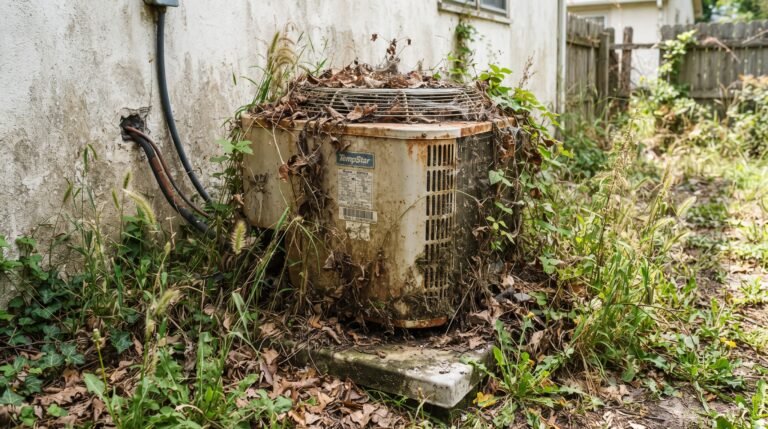
- Dirty condenser coils. Outdoor units collect grass clippings, dirt, and debris. When coils cannot release heat, cooling capacity drops sharply.
- Refrigerant leaks. Low refrigerant usually means a leak, not just a top-off need. Running a low-charge system can destroy the compressor.
- Worn electrical components. Capacitors and contactors fail under heavy summer use, causing units to hum but not start.
- Blocked drain lines. Humidity produces heavy condensation, and a clogged drain line can shut the system down.
- Duct leaks. In attics that routinely reach 130 degrees, leaky ductwork wastes a huge share of your cooled air.
Nearly all of these failures are caught early during a routine AC tune-up, which is exactly why the twice-yearly schedule matters so much in Texas.
Step-by-Step Troubleshooting Tips (DIY-Safe)
Before you call anyone, a few safe checks can solve the simplest problems. These steps are homeowner-safe and require no special tools.
- Check the thermostat settings. Confirm it is set to Cool, not Heat or Fan, and that the temperature is set below the current room temperature.
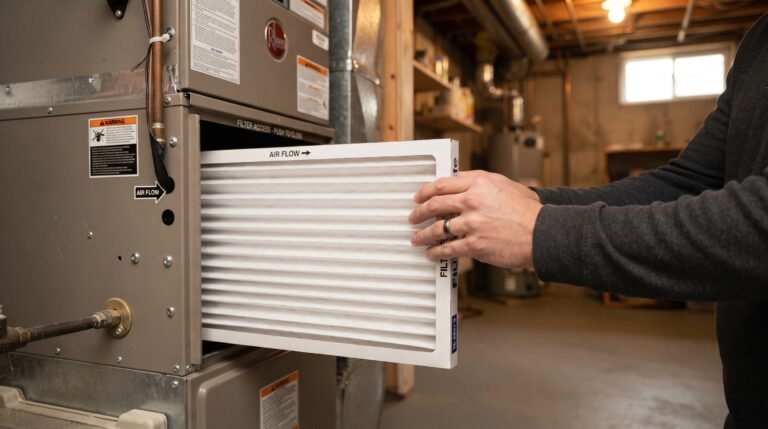
- Inspect and replace the air filter. If the filter looks gray and clogged, replace it. In Texas, check filters monthly during summer.
- Verify circuit breakers. A tripped breaker will shut the system down. Reset it once; if it trips again, stop and call a technician.
- Clear the outdoor condenser unit. Remove leaves, grass, and debris within two feet of the unit. Gently rinse coils with a garden hose, never a pressure washer.
- Check the condensate drain. If water is pooling near the indoor unit, the drain line may be clogged. A wet/dry vacuum can often clear it.
- Look at the registers. Make sure supply and return vents are open and unblocked by furniture.
If the system still will not cool after these steps, the problem is beyond DIY scope. Refrigerant handling, electrical repairs, and compressor work are strictly professional jobs, and attempting them yourself can be dangerous.
When to Call a Professional AC Repair Technician
Some situations should never wait. Call a certified AC technician in Texas immediately if you notice:
- Warm air blowing when the system is set to cool
- Burning smells, buzzing from the electrical panel, or visible sparks
- Ice forming on refrigerant lines or the indoor coil
- The system failing entirely during a heat advisory
- A breaker that trips repeatedly
Delaying professional help in these cases usually turns a modest repair into a full replacement. Reputable providers offering AC maintenance near you can often dispatch a technician the same day, which matters when indoor temperatures climb past 90 degrees.
Benefits of Hiring a Local AC Repair Expert
Choosing a local provider beats calling a national call center. Here is why Texas homeowners are better served by local HVAC professionals:
- Faster response times. A Texas-based crew understands heat emergencies and prioritizes same-day and 24/7 emergency AC repair.
- Climate-specific expertise. Technicians familiar with Texas humidity and dust know exactly which failure patterns to look for.
- Code and warranty compliance. Certified, licensed technicians keep manufacturer warranties valid and repairs up to state code.
- Honest local accountability. Local companies live and die by community reviews, so they have every reason to price fairly and stand behind their work.
- Preventive maintenance plans. Many local pros offer seasonal tune-up plans that keep you on schedule automatically.
For trusted, certified service near you, schedule your AC repair at hvacservicetexas.com or call +1 866-502-1393 today. A qualified HVAC technician will restore your comfort quickly and help you build a maintenance schedule that prevents the next breakdown.
Do not wait until your AC fails during the next heatwave. Whether you need routine AC maintenance, an urgent air conditioner repair, or a certified AC technician near you, the experienced team at hvacservicetexas.com is ready to help. Call +1 866-502-1393 now or book online to schedule your AC repair with a local expert near you.

One Comment